Patrick Byrne part 10: in the Scottish borders and touring Ulster, 1850

And so we continue to try and work through all of the documents for the life of the traditional Irish harper, Patrick Byrne (1790s – 1863).

You can catch up with his life and work up to this point, in my previous posts about him:
Part 1 covers Patrick Byrne’s early years and education, down to his discharge from harp school in 1822.
Part 2, looks at his early career, working for patrons in Ireland and England from 1822 to 1837.
Part 3 covers his first visit to Scotland over the winter of 1837-8, and his tour of Ireland in 1839-40.
Part 4 looks at him playing for Queen Victoria at Windsor Castle, and then touring mostly in Ireland and a bit in England in 1841-4.
Part 5 covers just six months, from when he went to Scotland at the beginning of 1845 until he headed back to Belfast on 25th June, including the Waverley Ball and having his photographs taken.
Part 6 covers the rest of 1845, and the whole of 1846, touring in the north of Ireland and the English midlands.
Part 7 covers Scotland in the first half of 1847, Ireland for the second part of 1847; England in the first part of 1848, and back in Ireland in Autumn 1848.
Part 8 covers Byrne’s trip to the south of England over Christmas 1848, where he played events in Hampshire and Wiltshire; and then the first half of 1849, when he went to Staffordshire and then came back to Ireland and met the antiquarian John Bell in Dungannon.
Part 9 covers his pursuit of Queen Victoria from Dublin to Balmoral in the summer of 1849.
This post (part 10) follows him from the end of 1849 through to the end of 1850, in the Scottish borders and touring Ulster.
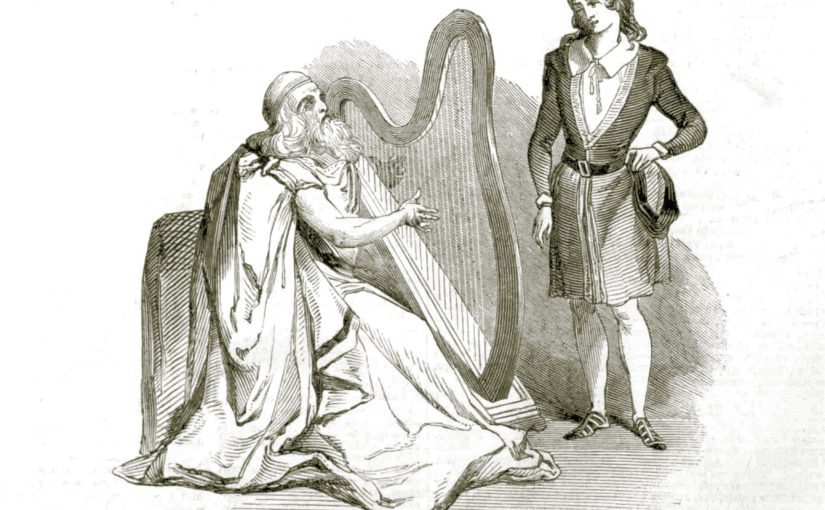
Continue reading Patrick Byrne part 10: in the Scottish borders and touring Ulster, 1850

Patrick Byrne part 5: Scotland, 1845

In Part 1, I wrote about Patrick Byrne’s early years and education, down to his discharge from harp school in 1822. Then in Part 2, we looked at his early career, working for patrons in Ireland and England from 1822 to 1837. Part 3 covered his first visit to Scotland over the winter of 1837-8, and his tour of Ireland in 1839-40. Then in Part 4 we looked at him playing for Queen Victoria at Windsor Castle, and then touring mostly in Ireland and a bit in England in 1841-4.

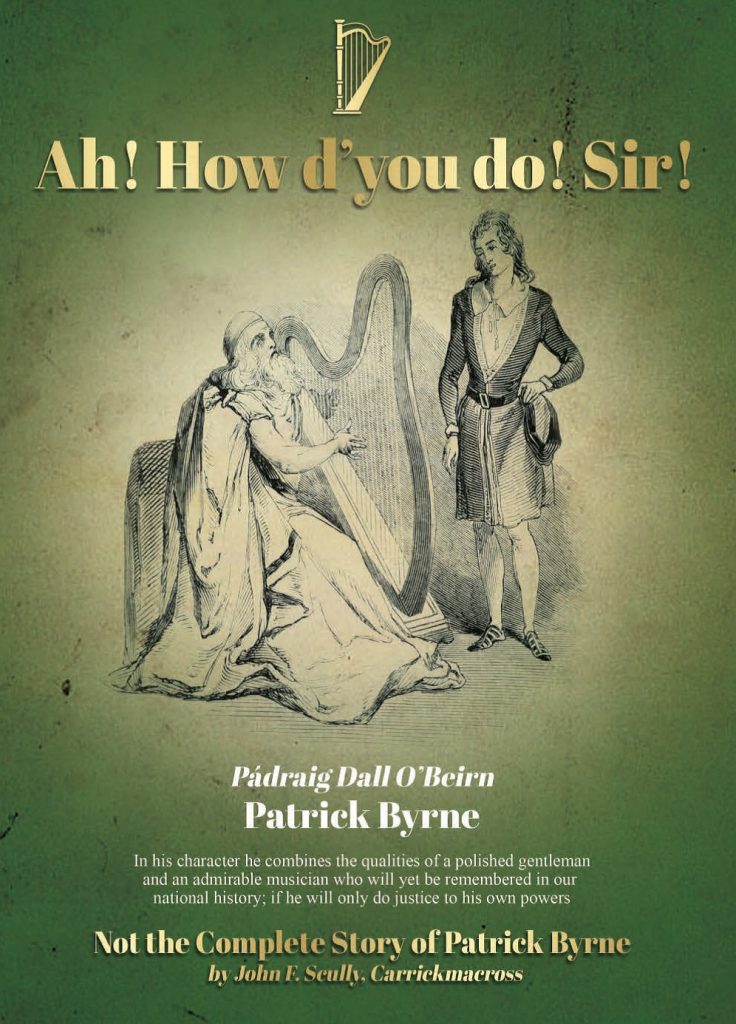
Since I posted part 4, John Scully has published his book Ah how d’you do sir (Carrickmacross, 2024) which gathers records of Byrne’s life, including many that I have included in my posts but also some that I had not found. I will refer to his book when he has found things that I didn’t know about. I have a few copies of John’s book in my shop.

By 1845, Patrick Byrne must have been around 50 years old. He was working hard, buoyed by his Royal patronage and his extensive networks of aristocratic patrons. At the beginning of 1845, he set off for his second trip to Scotland. It was a busy trip, and so this post will follow him for about six months, from when he went over at the beginning of 1845, until he headed back to Belfast on 25th June.

Continue reading Patrick Byrne part 5: Scotland, 1845

Archie Anderson, scots songs

The most popular record at yesterday’s Wighton Centre event was the 1914 disc of Archie Anderson singing Scots songs with a wind-band accompaniment. Some of the Scots Song group who meet weekly in the Wighton Centre were there, and they of course knew the songs and so were very interested to hear this 100 year old recording being played on the antique wind-up machine.

I played his recording of “Jock o’ Hazeldean”, a traditional border ballad re-written by Water Scott, as part of the half hour event. At the end, Sheena Wellington acting as host suggested there would be time for an extra disc before everyone had to leave, so I asked if anyone had any requests, suggesting perhaps a second side of one of the discs we had heard. Archie Anderson’s record was the one called for, so I played the other side, “The Bonnie Lass of Ballochmyle”, a song by Robert Burns.

When I got home yesterday evening I played them both for you to hear as well! I hope you enjoy listening: