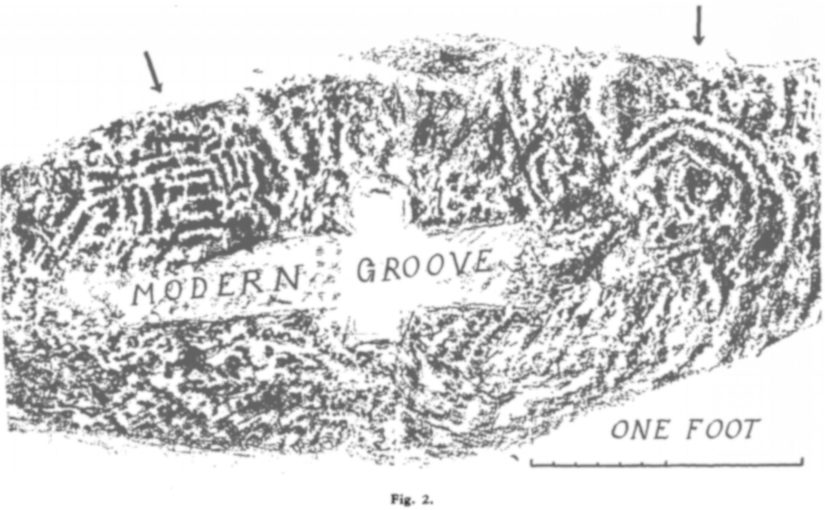
Bunting has written two tunes on Queen’s University Belfast, Special Collections, MS4.29 page 220/218/227/f108v. At first they seem clear, with clearly written titles. But I cannot find other versions of them, and I do not know if these are harp transcriptions, or fiddle or vocal performances that Bunting has transcribed.
Continue reading Two more mystery tunesnews
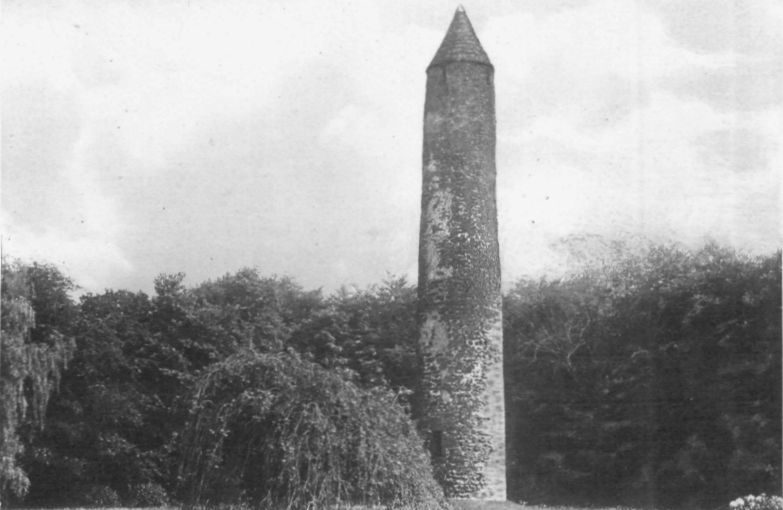
Is aoibhinn aoibhinn cloigtheach Aontroim
On Queen’s University, Belfast, Special Collections, MS4.29 page 218/216/225/f107v Edward Bunting has made a live transcription notation of a song air.
Beneath the tune, someone has written what I take to be the title for this tune: “is aoiḃin, aoiḃin cleachach aointrim / ah! how handsome the steeple of Antrim is”. I think this may not be Bunting’s handwriting; whoever wrote it seems to have been literate in Irish, writing the letter b with the dot (for bh).
This is a line from the song of “An bile buadhach”. Bunting later published a variant of the tune under that title in his 1809 book. But first of all let us look at the transcription.
Continue reading Is aoibhinn aoibhinn cloigtheach Aontroim
Bonny Portmore
Edward Bunting made a live transcription notation of the tune of “Bonny Portmore” into one of his collecting pamphlets in the 1790s.
Continue reading Bonny Portmore
Two mystery tunes
One of the fun parts of my Old Irish Harp Transcriptions Project is discovering previously unrecognised or neglected live “dots” transcriptions of well-known tunes, most spectacularly with the Fairy Queen. And so the corollary is that one of the most irritating parts of the project is to find clear complete transcriptions of tunes that I cannot recognise from anywhere else.
Continue reading Two mystery tunes
Lady Maisterton
There is what looks like a live transcription of the tune of Lady Maisterton, in the middle of a load of material copied from printed books into Edward Bunting’s collecting pamphlets, at Queen’s University Belfast, Special Collections, MS4.29 page 206/204/213/f101v.
Continue reading Lady Maisterton
Planxty Dermot
On Queen’s University Belfast, Special Collections, MS4.29 page 191 there are two tunes written in a very similar style. At the top of the page is “Planxty Dermot” and at the bottom is “Cathal Mac Koo”.
Continue reading Planxty Dermot
The Weaver’s Lamentation
Edward Bunting wrote a song with a full piano arrangement into one of his collecting pamphlets, probably in the summer of 1792. I was going to silently pass over these pages as part of my Old Irish Harp Transcriptions Project, but I thought that actually this is an interesting enough thing to do a post about it.
Continue reading The Weaver’s Lamentation
Two difficult sections
One reason it has taken me a long time to get to my next tune is that there are a lot of pages in Queen’s University Belfast, Special Collections, MS4.29 which I have skipped. There is a big section of mostly or entirely Denis O’Hampsey material from pages 164 to 172, which I am skipping because I am concentrating on the other harpers. Then there are two sections which don’t seem to be harp transcriptions. I am less certain about identifying what these are, since my focus has been on spotting the harp style and idiom.
Continue reading Two difficult sections
Bob Jordan
Edward Bunting made what looks like a live transcription of a harp performance of Bob Jordan, apparently in 1792. You can see the transcription notation at Queen’s University Belfast, Special Collections, MS4.29 page 162/160/169/f79v.
Continue reading Bob Jordan
Eleanor Plunkett
Carolan’s song addressed to Eleanor Plunkett, which begins “A Nelly an chúil chraobhaigh”, is fairly well known nowadays.
Continue reading Eleanor Plunkett