It is a common trope in the world of historical Gaelic harp studies that the tradition was “broken” in the 19th century, that the revivers of the harp of Ireland and Scotland had no contact with the last of the old tradition-bearers. But yesterday, Sylvia asked me if I was sure that this was true, and so I started to wonder.
news
Quin’s Burns’s March
I was discussing Burns’s March with one of my students, saying how it was the most important model for old Gaelic harp (Irish harp, clarsach) technique and style. They said that there was a need for written-out versions fully marked up with fingering and damping.
Carlione
Looking through the books from the Jimmy Shand Collection in Dundee library for a tune to play on Saturday week at the free community concert in Dundee, I noticed “Carlione a Favourite Irish Tune” in Neil Gow’s third collection (1792). It is Dr John Stafford, or Carolan’s Receipt (no. 161 in Donal O’Sullivan’s index).
Whether or not I’lI get it up and running to play in two weeks time, it got me thinking about tunes titled with strange variants of Carolan’s name.
Hand position
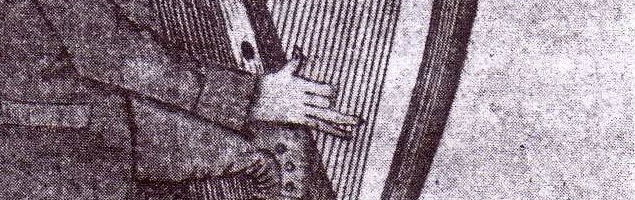
I’m working on the 3rd edition of my book Progressive Lessons. I decided to be more focussed and concentrate only on the three beginners’ tunes from the testimony of Patrick Quin and Denis O’Hampsey. Looking again at the manuscript sources, I am seeing a lot of things that I had not paid attention to before, and which are worryingly different from the way I have been playing and teaching these tunes up to now.
Medieval Gaelic harp setup
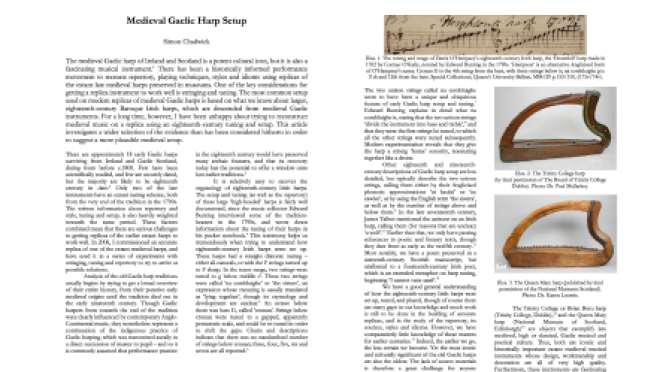
My article ‘Medieval Gaelic harp setup’ is published in the current volume of Early Music Performer. (no. 40, Spring 2017, p.16-25)
The Highland Lamentation
I have been working with a student on Rory Dall’s Port from James Oswald’s Caledonian Pocket Companion. I have written on this blog before about how I think this tune was composed by Oswald as a pastiche of old Gaelic harp style.
Playing the harp for Nathaniel Gow
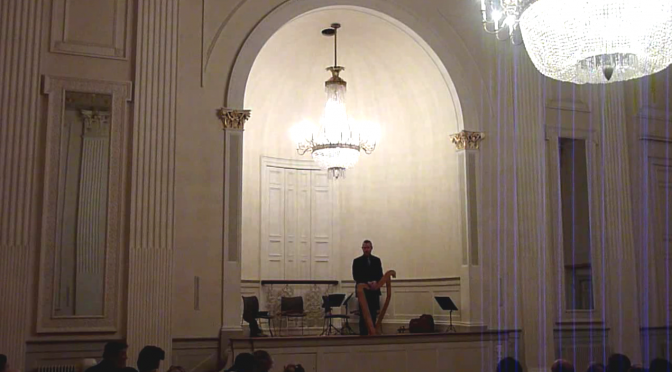
“Nathaniel Gow’s Dance Band Concert” last night at the Edinburgh Assembly rooms was far, far more exciting, beautiful and moving than I had expected. The venue was just stunning, the band was amazing, the dancers were elegant and alluring, the programming was just perfect and the audience was almost full and really engaged with the entire project.
early 19th century Irish harp music
For my 10-minute set in next Friday’s 1817 bicentenary concert, I have been thinking about what tunes to play, and how to approach them.
Nathaniel Gow’s annual ball, 1817
On Friday 20th January, I will be in the Assembly Rooms in Edinburgh, playing as part of a bicentenary concert. Nathaniel Gow introduced Quadrille dances to Edinburgh in 1817, at his annual ball at the Assembly Rooms, and this year Talitha MacKenzie has organised a series of events commemorating this. The main event will be a Regency ball on Saturday 11th March, but there will also be dance workshops and the concert on 20th Jan.
Teresa McCormac of Dublin
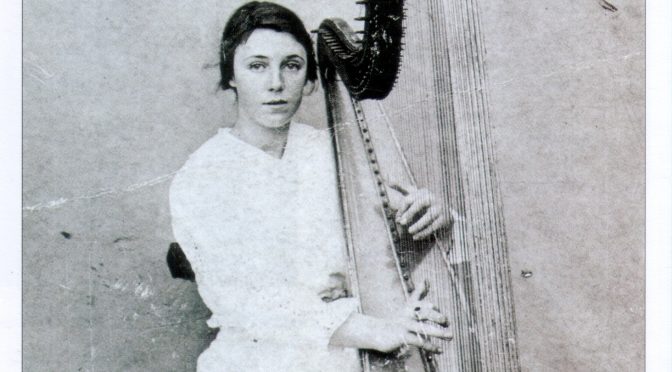
I found a shellac 78 disc of Irish harp played by Treasa Ní Chormaic. I don’t know the date of this disc.
Update Jan 2018: Bill Dean-Myatt says it was recorded circa September 1930
I have transferred both sides onto mp3 for you, using a modern turntable.